If you're planning to study, train, or work in Germany, you've probably run into terms like A1, A2, B1, B2, C1, and C2. These German language levels are used across Europe to measure language proficiency, and understanding them is the first step to setting realistic goals whether you're prepping for an A1 German exam or aiming for advanced fluency for a healthcare job in Germany.
In this guide, we'll break down each level, what you can actually do at each stage, and most importantly which level you need depending on your goal: Ausbildung, healthcare recruitment, higher education, or daily life in Germany.
What Are German Language Levels?
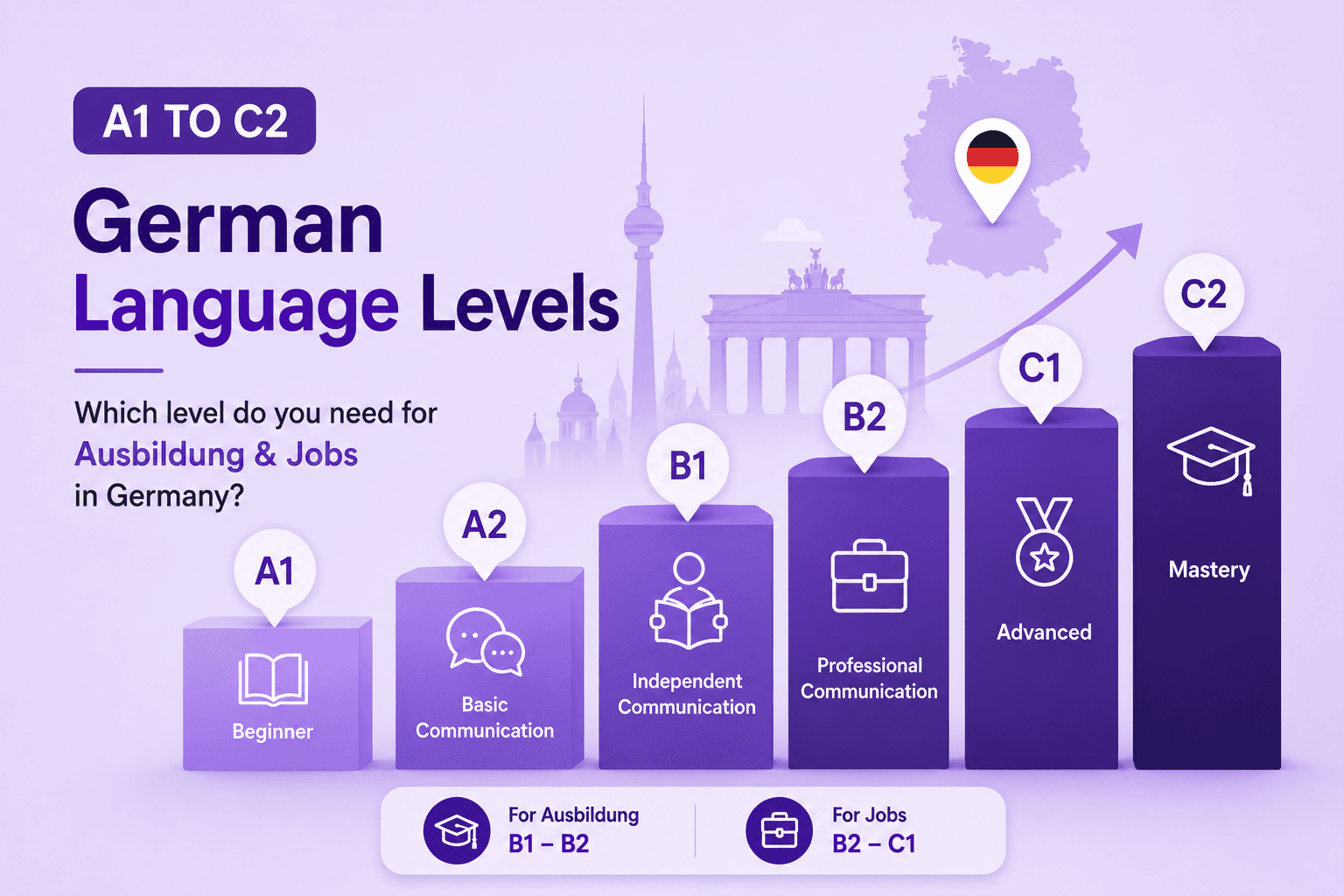
German language levels follow the Common European Framework of Reference for Languages (CEFR), the internationally recognized standard for measuring language ability. The framework divides proficiency into six levels:
A1 – Beginner
A2 – Elementary
B1 – Intermediate
B2 – Upper Intermediate
C1 – Advanced
C2 – Proficient
These levels aren't unique to German they're used across most European languages but for anyone pursuing an Ausbildung (vocational training) or a healthcare career in Germany, they're the benchmark that visa offices, employers, and training institutes will ask about directly.
A1 Level: The Starting Stage
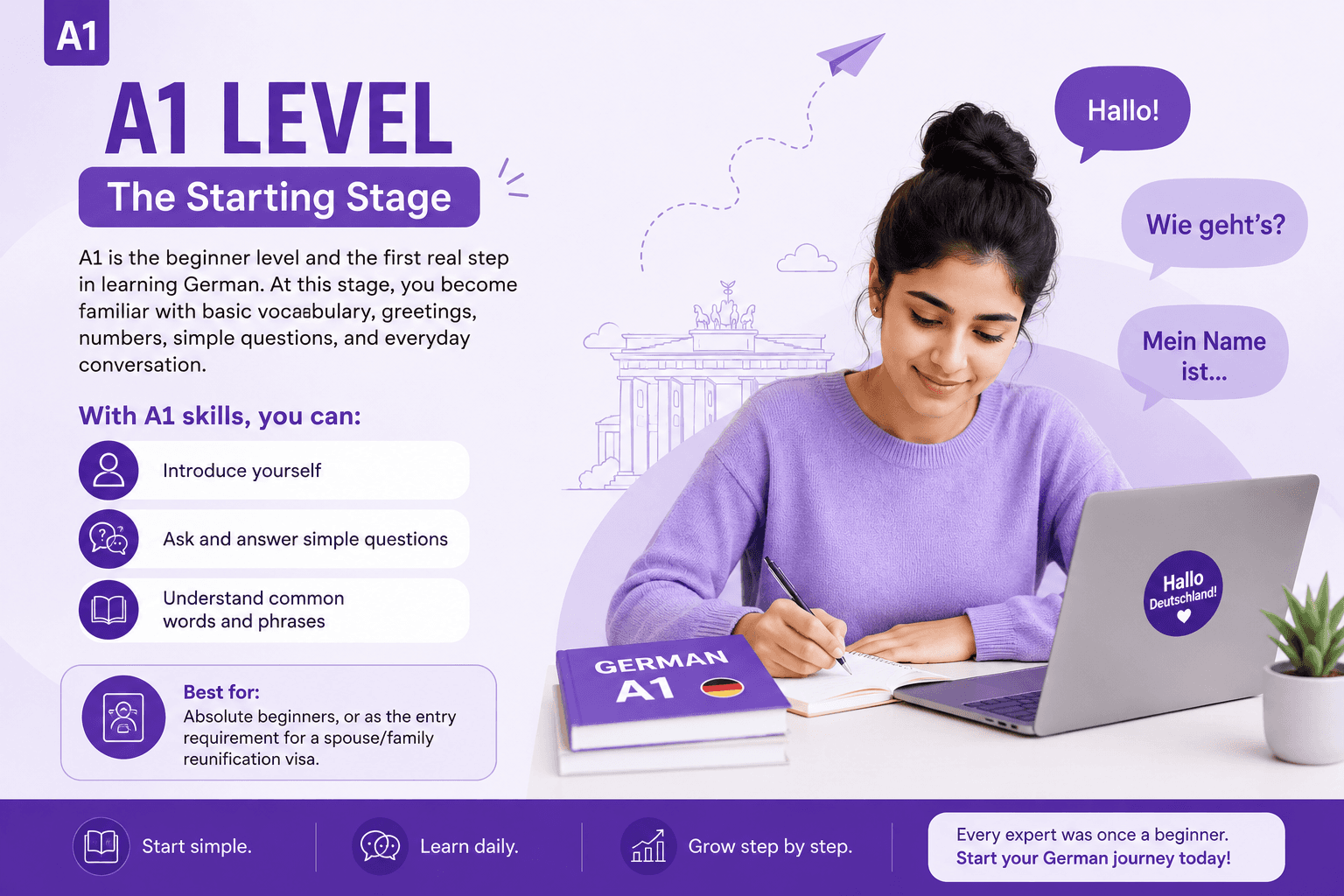
A1 is the beginner level and the first real step in learning German. At this stage, you become familiar with basic vocabulary, greetings, numbers, simple questions, and everyday conversation.
With A1 skills, you can:
Introduce yourself
Ask and answer simple questions
Understand common words and phrases
Best for: Absolute beginners, or as the entry requirement for a spouse/family reunification visa.
A2 Level: Building Everyday Communication
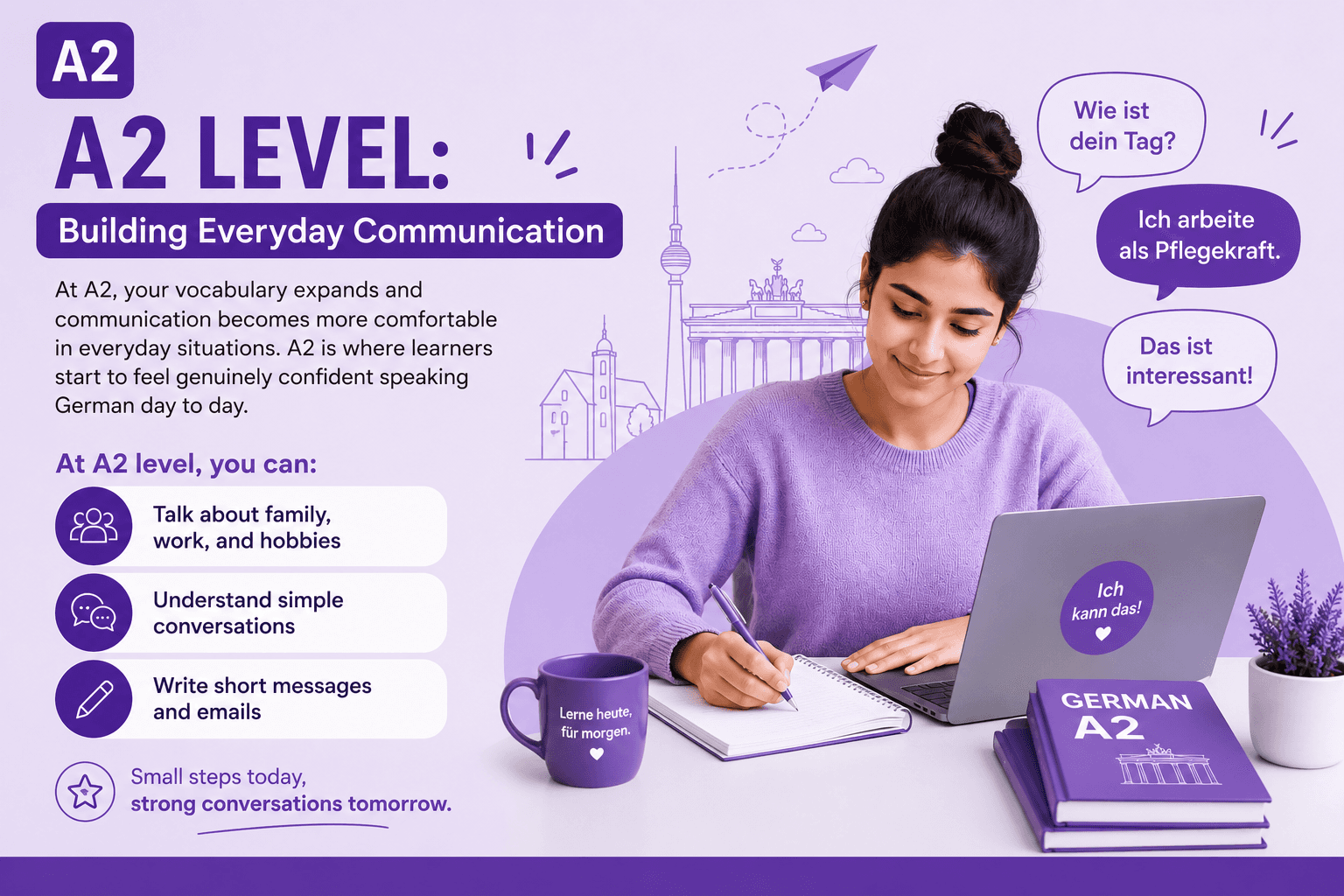
At A2, your vocabulary expands and communication becomes more comfortable in everyday situations. A2 is where learners start to feel genuinely confident speaking German day to day.
At A2 level, you can:
Talk about family, work, and hobbies
Understand simple conversations
Write short messages and emails
B1 Level: Becoming Independent
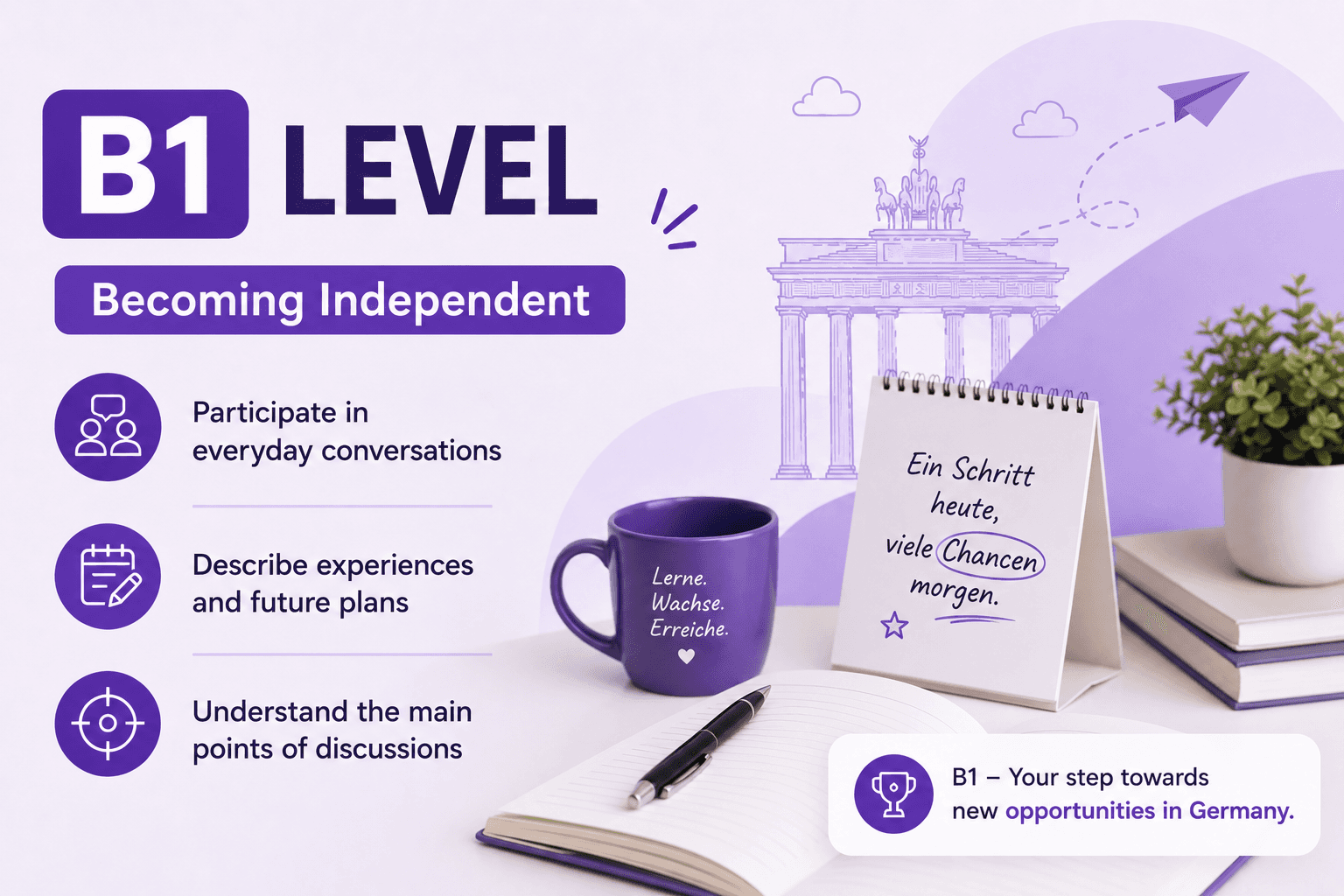
B1 is often considered a major milestone in German learning. Learners can communicate more naturally and understand a wider range of topics. For many international professionals, B1 is the minimum requirement for Ausbildung programs and several vocational training pathways in Germany.
With B1 skills, you can:
Participate in everyday conversations
Describe experiences and future plans
Understand the main points of discussions
Best for: Ausbildung applicants and vocational training candidates this is typically the level Xpolariz recommends students reach before beginning their Ausbildung journey.
B2 Level: Professional Communication
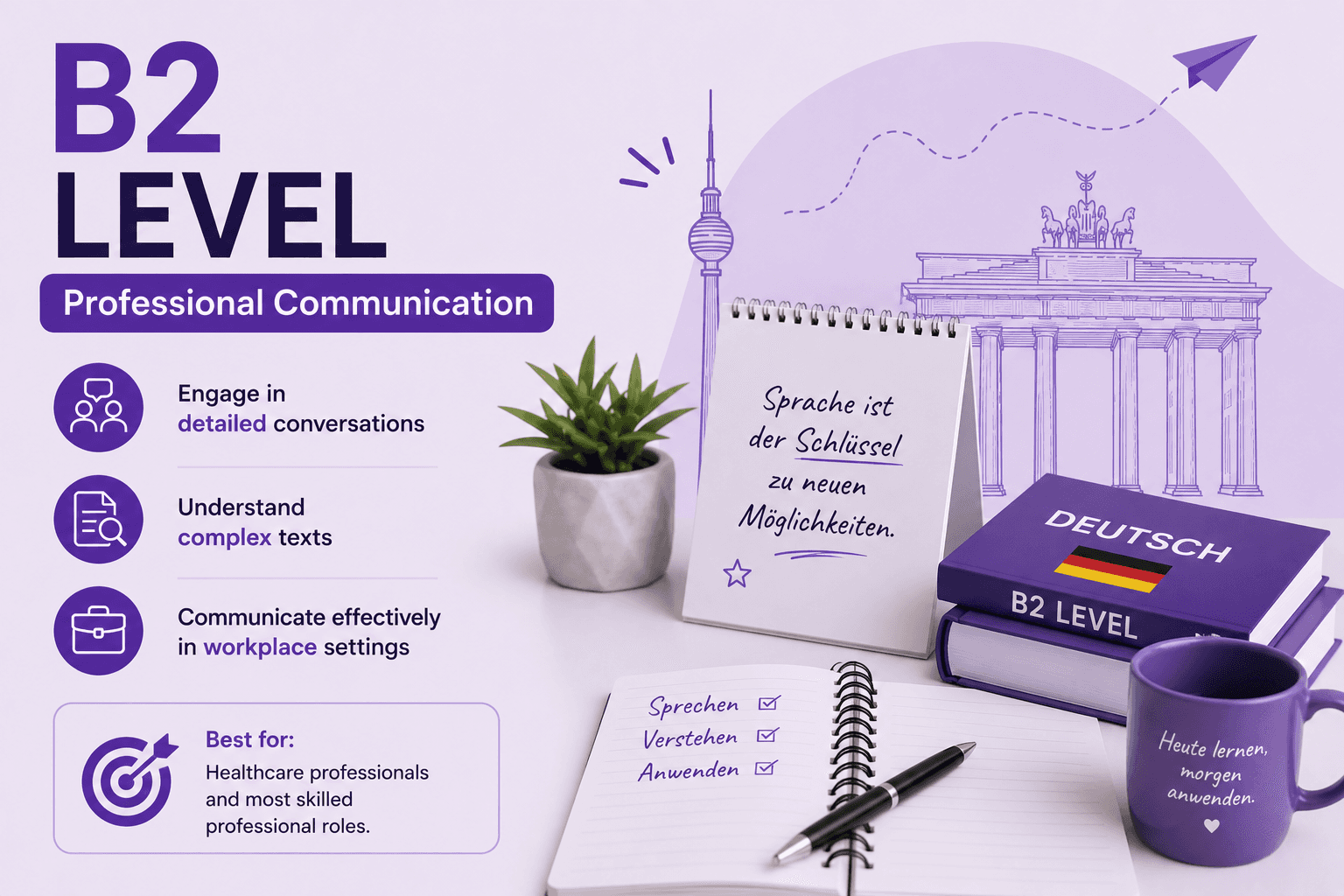
B2 is where German starts working for you professionally. Many German employers prefer candidates with B2 proficiency because it allows smoother communication with colleagues, clients, and customers. For healthcare professionals such as nurses and physiotherapists, B2 is one of the most commonly required levels for recognition and employment in Germany.
At B2 level, you can:
Engage in detailed conversations
Understand complex texts
Communicate effectively in workplace settings
Best for: Healthcare recruitment candidates (nurses, caregivers, physiotherapists) and most skilled professional roles.
C1 Level: Advanced Fluency
C1 represents advanced proficiency. Learners can understand complex topics and communicate fluently with minimal effort. C1 is often required for higher education programs, specialized professions, and advanced career roles in Germany.
With C1 skills, you can:
Understand professional and academic content
Participate in advanced discussions
Write detailed reports and presentations
Best for: University applicants and specialized/senior professional roles.
C2 Level: Native-Like Proficiency
C2 is the highest German language level, indicating near-native mastery. Not everyone needs C2 certification, but it demonstrates exceptional command of the language.
At this level, you can:
Understand virtually everything you hear or read
Express ideas with precision
Work in highly specialized professional environments
Which German Language Level Do You Need?
Goal | Recommended Level |
|---|---|
Daily life & basic communication | A1 or A2 |
Vocational training (Ausbildung) | B1 |
Professional jobs, especially healthcare | B2 |
Higher education (university) | C1 |
Advanced/specialized professional roles | C1 or C2 |
Tips for Progressing Through German Language Levels
Learning German is a gradual process that needs consistency. Some effective ways to improve include:
Attending structured language classes
Practicing speaking regularly
Watching German videos and listening to podcasts
Reading simple German articles and books
Taking mock exams and practice tests
Frequently Asked Questions !
Is B1 enough for Ausbildung in Germany?
Yes, in most cases B1 is the standard minimum requirement for Ausbildung programs, though some employers or training institutes may prefer B2 depending on the field.
Do I need B2 or C1 for nursing jobs in Germany?
B2 is the most commonly required level for nurses and healthcare professionals seeking recognition and employment in Germany. Some specialized roles may ask for C1.
How long does it take to reach B1 in German?
On average, with consistent study (structured classes plus regular practice), learners can reach B1 in about 6–9 months, depending on prior language learning experience and study intensity.
Can I go straight to B1 without starting from A1?
It's technically possible if you already have some German exposure, but most training programs recommend building a proper foundation from A1 through A2 before B1, since each level builds directly on the last.
Which German level is required for a study visa?
Most German universities require C1 proficiency for degree programs taught in German, though English-taught programs may have different requirements.
Understanding German language levels is the first step toward building a successful learning journey. From A1 to C1, each level has an important part in developing your language skills. Whether you study, work or build a career in Germany, choosing the right level and learning path can make the process easier and more rewarding.
We support students and professionals in their German language journey through structured training programs, experienced trainers, worksheets, mock tests and practical learning methods. Xpolariz guides and supports people in all levels to build confidence and achieve their language levels for study and career opportunities in Germany.
Conclusion
Ready to start your German language journey and explore Ausbildung or healthcare career opportunities in Germany? Xpolariz supports students and professionals at every level with structured training programs, experienced trainers, worksheets, mock tests, and practical learning methods.
Connect with us on Whatsapp: to get your questions answered directly!
Follow us on Instagram for updates on upcoming opportunities.
Apply now and take the first step toward your German language goals.

Get started now
Get started now

Contact us

+91 9600204511 / +91 9600204611

info@xpolariz.com

1st Floor, No 167/387, Mariamman Kovil St, Peelamedu Pudur, Masakalipalayam, Coimbatore, Tamil Nadu 641004
Offices
Tamil Nadu
Coimbatore
1st Floor, No 167/387, Mariamman Kovil St, Peelamedu Pudur,, Coimbatore, Tamil Nadu 641004
Kerala
Thrissur
1st Floor, Citygate Resorts, 36/6797, Paliyam Rd, Patturaikkal, Thrissur, Kerala 680020