Chef
Hotels and food
Learn to cook meals in hotel and restaurant kitchens.
- B2 German, full module
- Age below 30
- New to the job or with experience
- 12th pass or more
Most Ausbildung is company-based: you train at a German company, learn at a vocational school and earn a training salary every month. Some health and social professions train at a school instead. For 12th-pass students across India.
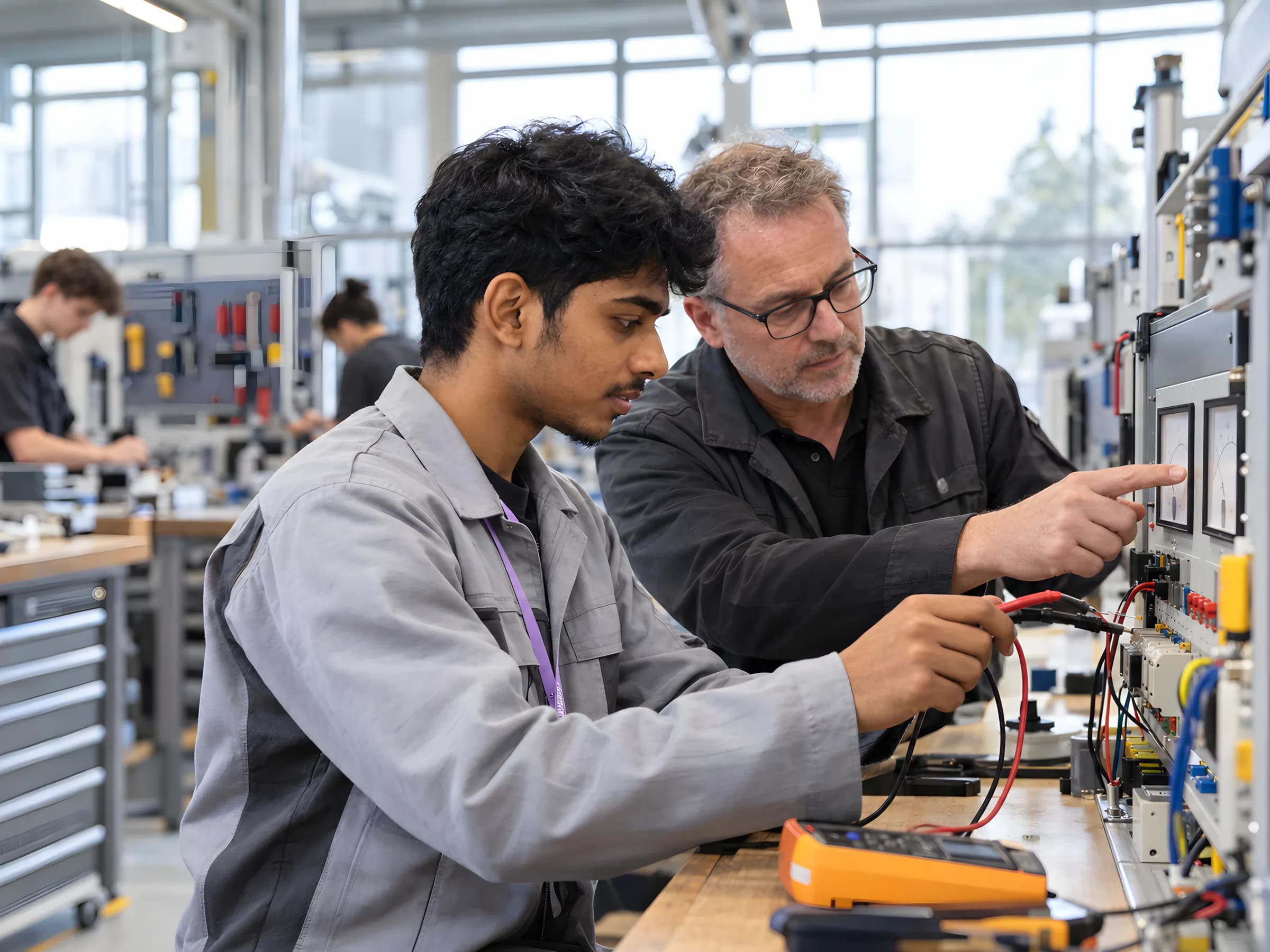
Ausbildung courses in Germany where you earn money while you learn. We add new courses often.
Hotels and food
Learn to cook meals in hotel and restaurant kitchens.
Healthcare
Look after sick people in hospitals and in homes for older people.
Transport
Store things in big storage buildings, move them and plan where they go.
Food
Learn to bake bread, cakes and other baked foods.
Hotels and food
Welcome guests, work at the reception and help run the hotel.
Food
Learn to cut, prepare and sell meat in a butcher shop or meat company.
Healthcare
Help the dentist with patients and keep the dental clinic running.
Hotels and food
Serve guests, take orders and look after the dining room.
Technology
Build and fix machines that have moving parts and electronic parts.
Not sure which course fits you? Ask us on WhatsApp
A German qualification you earn while you work and get paid.
Some professions, mainly in healthcare, social work and education, are taught full time at a vocational school, with internships. This usually takes one to three years. There is no fixed salary, public schools are free and private schools often charge fees. Healthcare training is the exception: trainees are paid for the whole training, and that includes nursing (Pflegefachfrau or Pflegefachmann).
At the company
Real work with a trainer. You are paid every month.
At the Berufsschule
Theory, German and your trade.
An example. Your school days depend on your company and school.
2 to 3.5
years of training
Monthly
training salary
German
qualification at the end
Fields where Germany looks for trainees, from Make it in Germany's in-demand list.
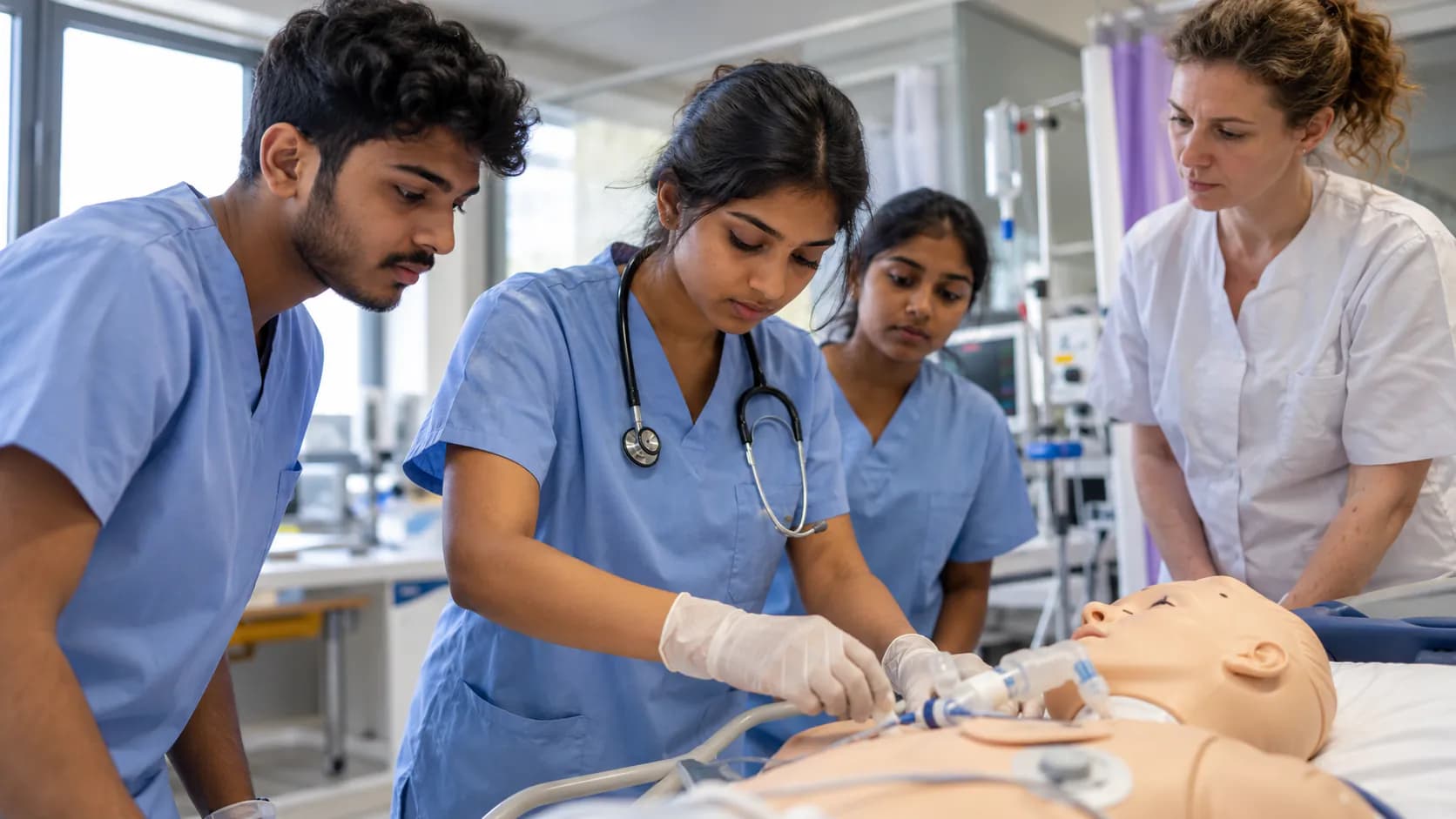
Pflegefachfrau or Pflegefachmann. Care for patients in hospitals and care homes. Three years full time, paid for the whole training.
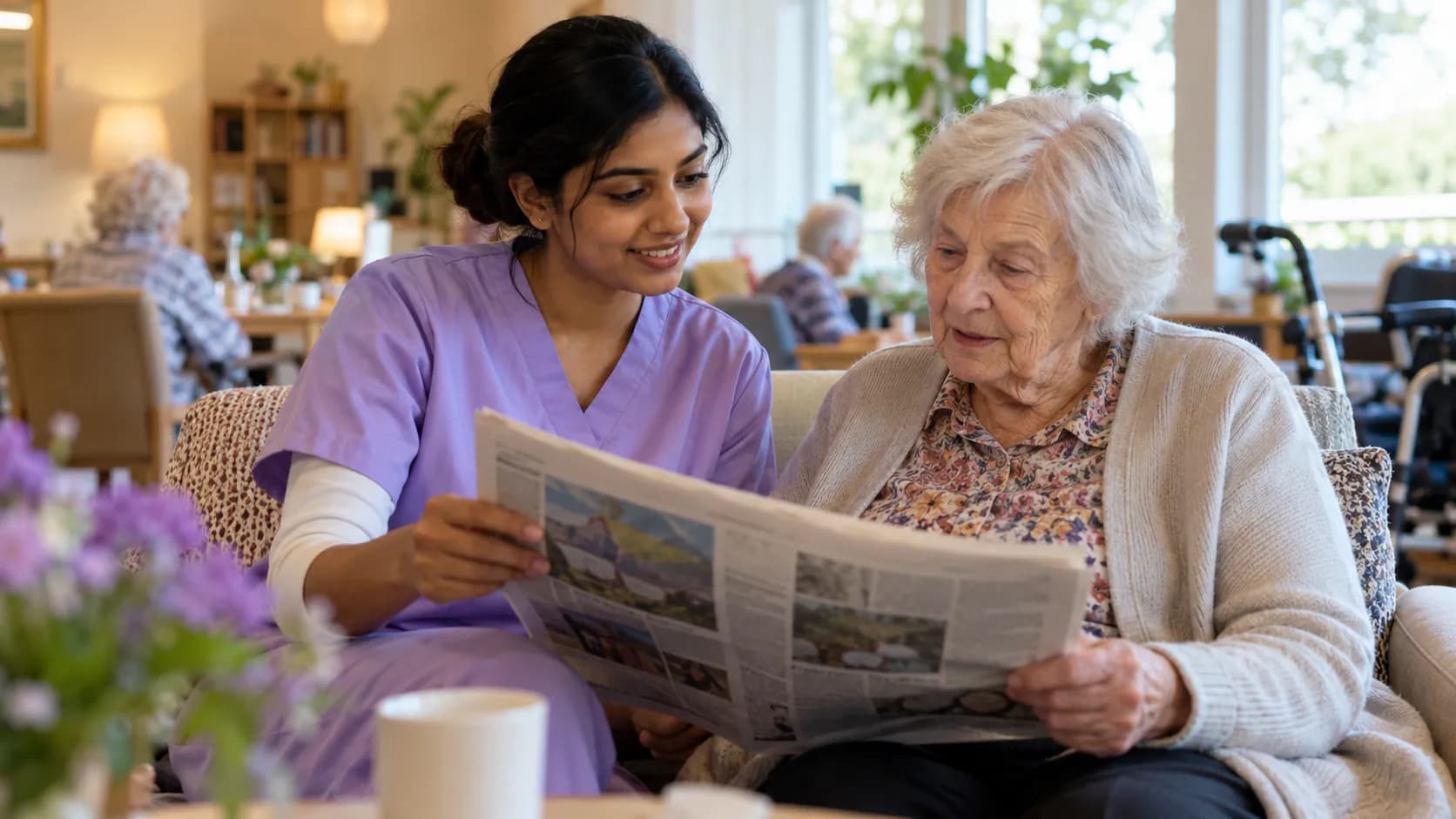
Support older people with daily life and care, as a care assistant. Each German state sets this training, so its length and rules differ by state.

Train as a cook or a hotel specialist: kitchen, reception and service work in hotels and restaurants. Company-based.
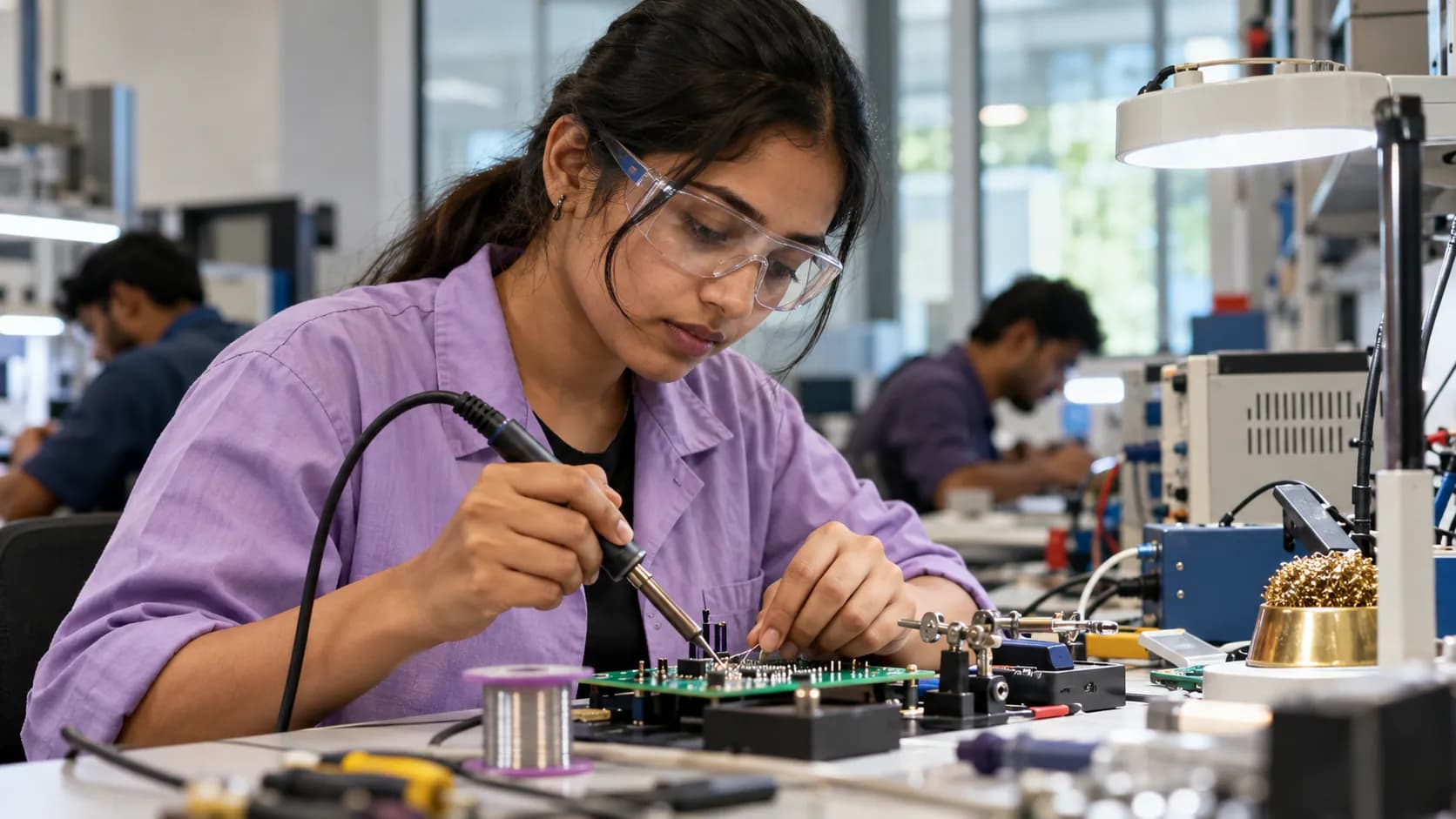
Train as an electronics technician: install and repair electrical systems and machines. Company-based, in the crafts.

Train in warehouse logistics or as a professional driver: plan, store and move goods. Company-based.
Pay is gross per month. Nursing is the public-sector rate from 1 May 2026. Hotel, electronics and logistics are the average agreed pay in 2025. Your training contract sets your own pay.
Gross per month, by year of training. 2026 figures.
| Year | Minimum allowance | Nursing trainee |
|---|---|---|
| Year 1 | €724 | €1,490.69 |
| Year 2 | €854 | €1,552.07 |
| Year 3 | €977 | €1,653.38 |
| Year 4 | €1,014 | Not applicable |
Minimum allowance: for training that starts in 2026. Nursing trainee: public employers, from 1 May 2026.
What our courses ask for, and what Germany asks for your visa.
12th pass
12th pass or higher. Bring your 10th and 12th mark sheets.
B2 German
Full module: you pass every part of the B2 exam.
Below 30
New or with work experience, both can apply.
Money proof
For the visa. Your training pay counts; if it is too low, you show the rest.
| Company-based training | School-based training | |
|---|---|---|
| School | No set school certificate in German law. Each company sets its own rule, and many ask for an intermediate certificate. | You must have finished general schooling and have it officially recognised. The certificate depends on the profession. |
| German | B1 normally. At least A2 at the German missions in India, and B1 for medical professions. Our courses ask for B2. | The same: B1 normally, at least A2 in India, B1 for medical professions. Our courses ask for B2. |
| Age | German law: any age. Our courses: below 30. | German law: any age. Our courses: below 30. |
| Money for the visa (2026) | Your training pay counts. At least €1,048 gross or €822 net a month. If it is lower, show the rest in a blocked account or with a declaration of commitment. | At least €959 net a month, shown with a blocked account, a declaration of commitment or a scholarship. |
For both, the German missions in India ask for your 10th and 12th mark sheets.
Three questions. Your result shows each rule and your next step.
Three quick questions.
Your result
Answer all three questions to see your result.
How the check works and the rules behind it: Ausbildung eligibility check
Five steps from your first German class to your first day of training.
Get to B2 with our classes, online or at our centres.
Apply to German companies and sign your training contract.
Your 10th and 12th mark sheets, the signed contract, and money proof if your pay is too low.
The training visa, at the German missions in India.
Fly before your start date and begin your first day at the company.
Most training starts on 1 August or 1 September. Count back from there.
Begin A1 early. Reaching B1 takes 350 to 650 lessons of 45 minutes.
First
Apply to companies and sign your training contract.
Then
Apply once your contract is signed. The visa needs it.
Then
Your first day at the company.
1 August or 1 September

Your German qualification opens the next door.
Vocational training in Germany. Most of it is company-based: you work and earn at a German company and spend one or two days a week at a vocational school, usually for two to three years. Some professions, mainly in healthcare, social work and education, are trained full time at a vocational school instead.
Yes. Our courses take people below 30, new to the job or with work experience.
Yes. Our courses ask for 12th pass or higher. Bring your 10th and 12th mark sheets: the German missions in India ask for them.
B2, full module: you pass every part of the B2 exam. We teach German from A1 to B2, online or at our centres.
In company-based training, the legal minimum for training that starts in 2026 is €724 a month in year 1, and it rises each year. Agreed training pay averaged €1,209 a month in 2025. School-based training has no fixed salary, except in healthcare training, and private schools can charge fees.
It depends on the kind of training (2026 amounts). Company-based: your training pay counts, and at least €1,048 gross or €822 net a month is enough. If it is lower, you show the rest with a blocked account or a declaration of commitment. School-based: at least €959 net a month, shown with a blocked account, a declaration of commitment or a scholarship.
With public employers from 1 May 2026:€1,490.69 a month in year 1, €1,552.07 in year 2 and €1,653.38 in year 3, gross. Private and church employers can pay differently.
Most training starts on 1 August or 1 September. Start German early and count back from there.
Yes, up to 20 hours a week, as long as the job is separate from your training.
You can stay in Germany for up to 18 months to find a qualified job. With your German qualification you can then work as a skilled worker.
Free call back. Bring your parents to the call.